
Autofocus or Fixed Focus: Define the Working Distance
Choose focus behaviour by target distance, required detail, settling time and mechanical conditions.
Prepared by Honglan Electronics
Choose focus behaviour around the distances your equipment must handle. A fixed installation with a controlled target plane has different needs from a device viewing objects at changing distances. The useful question is whether the complete optical assembly maintains the required detail across the intended operating range.
Distinguish focus from focal length
Fixed focal length and fixed focus describe different properties. A lens can have a fixed focal length while allowing focus adjustment. Edmund Optics makes this distinction in its imaging guidance. Ask a supplier to describe the actual adjustment and locking arrangement instead of relying on an abbreviated lens label.
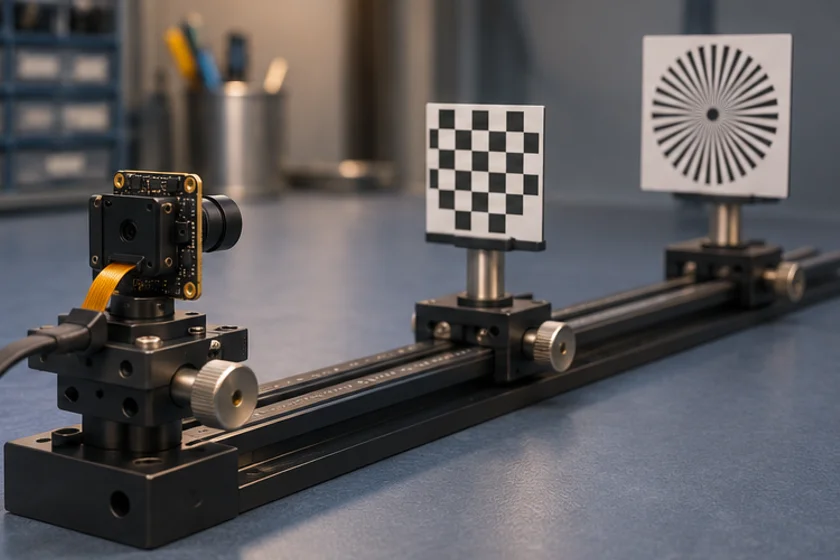
Write down the nearest, nominal and farthest target positions. Include manufacturing and installation tolerances. Define the relevant target detail at the centre and near the edges. A camera that looks sharp on a convenient test card may miss a critical feature at the edge of the real workspace.
Evaluate a fixed-focus assembly
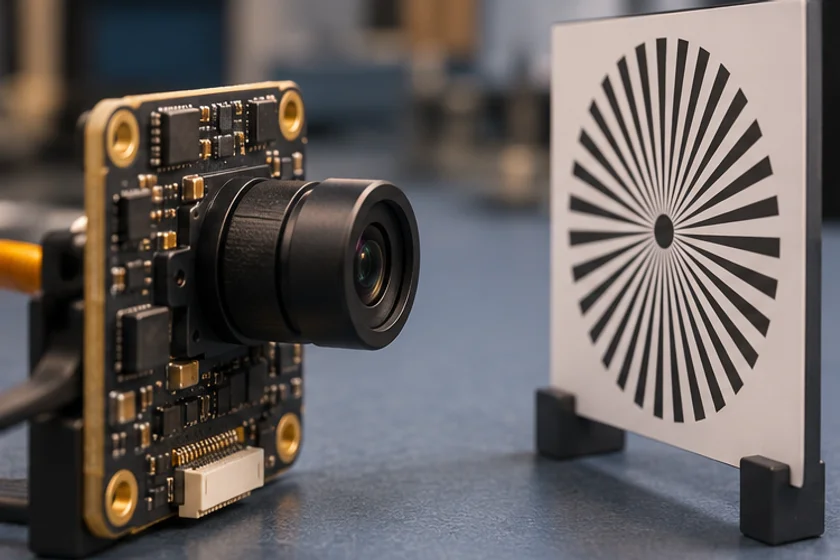
For a controlled distance, test whether a set and secured focus position covers the required range. Examine the complete assembly after mounting, with its protective window and actual illumination. Record the method used to set focus so the production process can reproduce it.
Depth of field describes the object-distance range considered acceptably sharp under a specified criterion. That criterion matters: a picture suitable for viewing may not be suitable for reading a small mark. Test with the intended analysis method and do not treat a depth-of-field figure as independent of image quality.
Evaluate an autofocus assembly
If target distances change, define how quickly focus must settle and what happens while it is moving. Test transitions between near and far targets. Include low-contrast surfaces, reflective objects and realistic lighting to identify conditions that require special handling.
Determine whether the application can command focus, lock a result or read status where supported. Check what survives a reconnect or power cycle. Optional controls must be confirmed for the selected module, firmware and capture API. Do not assume every UVC application exposes the same controls.
Mechanical and production questions
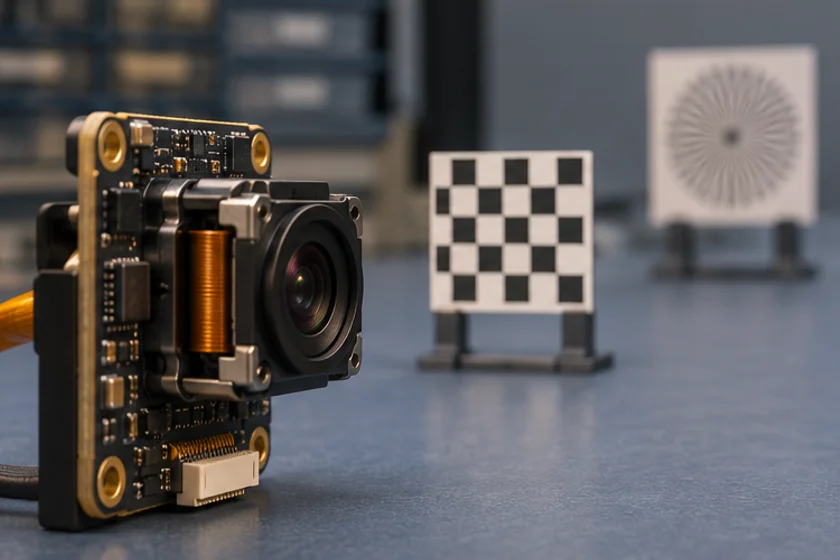
Ask how the lens position, holder and any adjustment are secured. Confirm whether protective films must be removed, which surfaces may be cleaned and how the unit is handled during assembly. Keep the focus setup separate from any unapproved mechanical adjustment that could damage the assembly or change its specification.
When the equipment includes vibration or temperature variation, define an appropriate validation plan with engineering. Do not invent a universal environmental limit. Record the conditions that were actually tested and the acceptance result.
Make the comparison measurable
- Place representative targets at the required distances.
- Evaluate centre and edge detail.
- Repeat with the production enclosure and window.
- For autofocus, log transition and settling behaviour.
- Repeat after reconnect and system restart.
- Confirm the approved lens and firmware in the purchase record.
Use the field-of-view guide alongside this test because coverage and focus need to work together. Send the distance range and target examples when discussing candidate modules; request evidence for the exact optical assembly proposed.
Apply this to a camera module
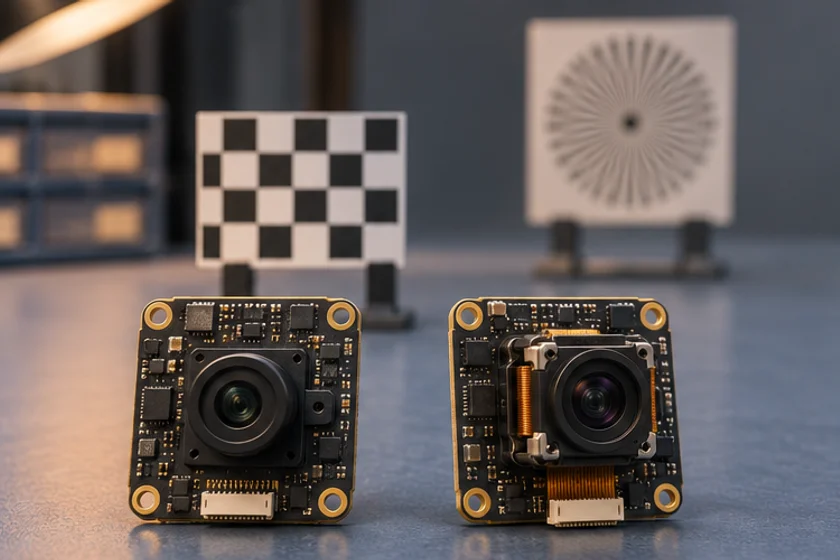
Compare the IMX362 autofocus module for changing subject distances and the fixed-focus IMX678 module for a fixed installation.
Technical references
- Define the distance range
- Check fixed-focus detail
- Measure autofocus settling
- Verify in the enclosure
Is fixed focal length the same as fixed focus?
No. Focal length describes an optical property; focus describes adjustment for object distance.
When should autofocus be tested carefully?
When distance changes, settling time matters, or low contrast and reflective targets may affect focusing behaviour.