
From Camera Sample to Production: Control the Approved Revision
Translate sample approval into a controlled specification, traceable production checks and a clear change process.
Prepared by Honglan Electronics
A sample approval is valuable only if the later supply can be compared with it. Before volume ordering, turn the accepted assembly and test evidence into a controlled specification. Agree which parts are fixed, how units are identified and what happens when something changes.
Freeze the reference configuration
List the approved board revision, sensor identification provided by the supplier, lens, focus arrangement, cable, connector and firmware. Attach the mechanical drawing and supported operating-mode table. Include relevant configuration files and the sample test report.
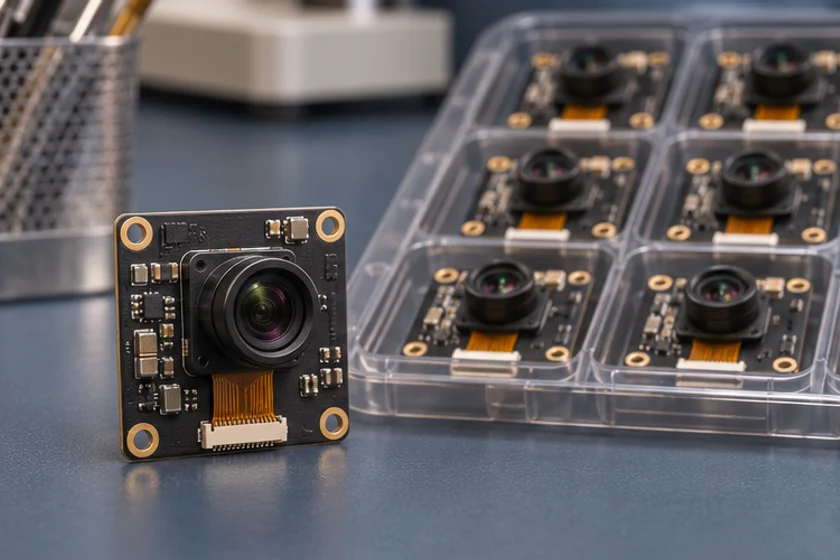
Keep a reference sample or an equivalent controlled reference agreed by both parties. Record its identity and storage responsibility. A photograph helps identification but does not replace the configuration record or the evidence showing why the assembly passed.
Convert observations into checks
For each important requirement, define a method and a pass condition. Examples include correct enumeration, a required video mode, useful target detail, focus at defined positions, visual assembly inspection and connector orientation. The actual thresholds must come from the equipment design and agreed test method.
Separate checks that run on every unit from checks performed on samples or during a qualification exercise. Discuss the practical limits of each method. Do not assume a supplier's general quality statement establishes the exact outgoing test for your order.
Preserve comparable imaging evidence
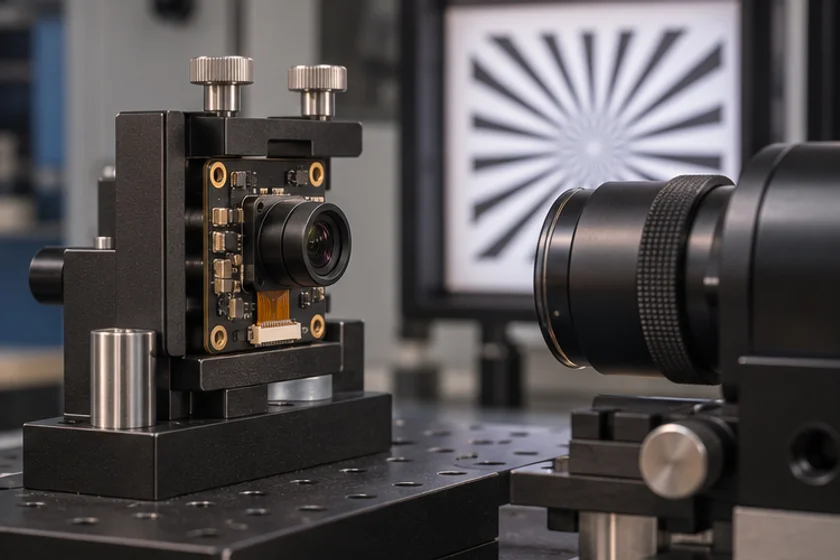
A changing image-processing setup can make comparisons misleading. Record illumination, target, distance, camera settings and analysis method. Use original captures where detailed comparison is required.
EMVA 1288 addresses consistent characterization of camera and sensor specifications. Where relevant characterization is supplied, retain its stated conditions. For your production agreement, define application-specific checks in addition to any general characterization report.
Agree traceability and handling
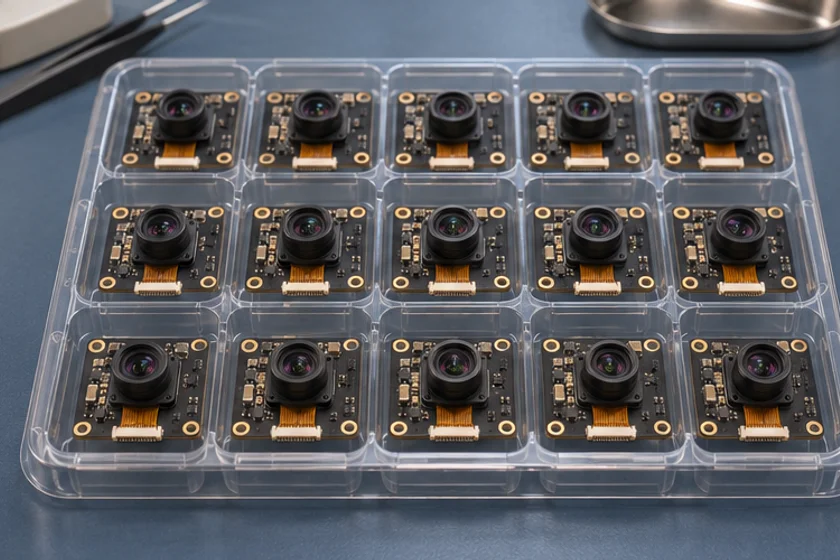
Ask how a unit or batch is linked to its assembly revision and test record. Decide which information appears on labels or delivery documents and what records can be supplied if a problem occurs. Avoid requesting personal or confidential manufacturing data that is unnecessary for resolving the issue.
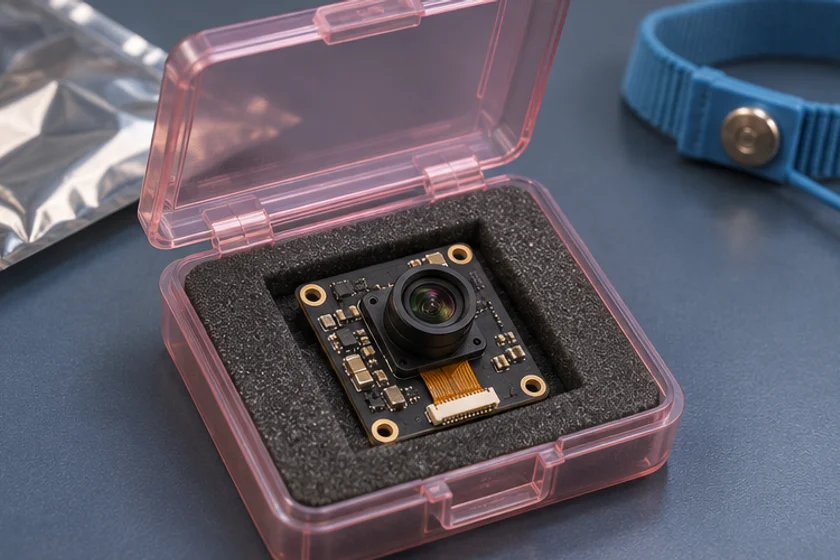
Document packaging, protection of optics, storage conditions and assembly handling using the supplier's approved instructions. Identify who removes protective materials and who checks for damage before installation.
Establish a change process
Changes can involve more than the sensor. A lens substitution, cable revision, firmware update or process change may affect the approved result. Agree notification responsibilities and decide what evidence is required before an alternative enters supply.
Use a change record describing the reason, affected units, specification differences and revalidation result. Do not approve an undocumented substitute simply because a single bench capture looks similar. Re-test the requirements that could be affected.
Handle nonconforming units with evidence
Create a clear route for reporting identity, symptoms, installation and reproducible steps. Preserve failing units when practical and protect sensitive captured data. Separate transport damage, integration faults and suspected manufacturing issues during investigation.
For repeat orders, review whether the host application or enclosure changed on your side as well. Consistency is a shared configuration problem: a stable camera can behave differently in modified equipment.
Start with the sample checklist, then discuss the production acceptance package. Confirm inspection, records, delivery and change conditions in the actual order instead of assuming they follow from a generic quality label.
Apply this to a camera module
The DH-4K-003 product page identifies the 9.9 mm configuration. Use its datasheet and your approved sample to keep the board revision consistent through ordering.
Technical references
- Record the approved revision
- Define repeatable checks
- Track production lots
- Review changes before release
Does approving a sensor name freeze the whole module?
No. Record the lens, board, cable, firmware, focus and operating modes as part of the approved configuration.
What should happen after a component substitution?
Document the change and revalidate affected requirements before accepting it into the approved supply.