
What to Prepare for a Custom Camera Module Project
Create a workable customization brief with optical, electrical, software, mechanical and acceptance requirements.
Prepared by Honglan Electronics
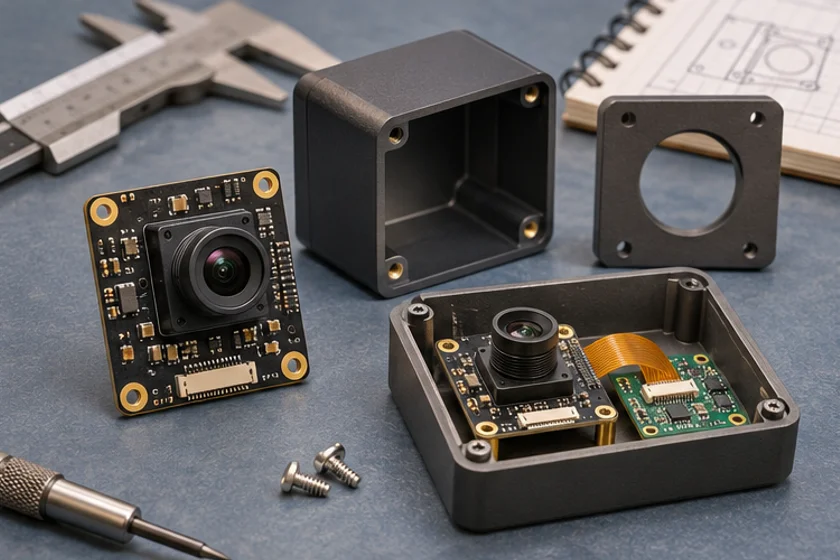
A custom camera discussion becomes productive when both teams can describe the required result and how it will be verified. Start with a requirements brief, a mechanical envelope and a sample acceptance plan. Do not begin by assuming that every sensor, lens, board change or firmware feature is feasible.
Explain the application and its constraints
Describe the task, target, installation and operating environment. Include representative images without confidential or personal information. State which design decisions are fixed and which can change. If an existing camera fails, provide the failure evidence rather than only requesting a replacement with more megapixels.
Separate mandatory requirements from preferences. Give each mandatory item an owner and a verification method. If an important limit is still unknown, identify the experiment needed to establish it. This is more useful than hiding uncertainty in a broad statement such as “industrial quality.”
Prepare the optical and mechanical information
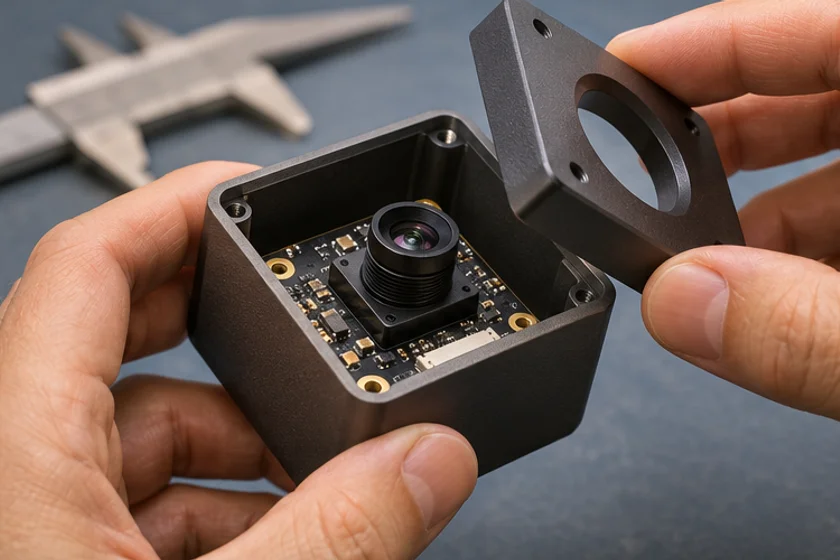
Provide target dimensions, working-distance range, camera position, coverage and the smallest useful feature. State the proposed lighting and any protective window. Include a three-dimensional enclosure model or dimensioned drawing with mounting points and keep-out regions.
Optical references explain why sensor region, focal length and distance must be considered together. Use that relationship to prepare a coherent brief, then ask for a feasible assembly rather than specifying incompatible parts independently. Confirm how focus will be set and checked in production.
Describe electrical and software integration
Identify the host, operating system, capture framework, interface, connector, cable and power source. List required video modes and controls. Specify which settings your application must change and whether those settings need to survive a restart.
For UVC proposals, distinguish ordinary video operation from optional controls and vendor extensions. Microsoft's implementation guidance is a useful starting point for Windows integration questions. Request confirmation for other target systems separately.
Do not send an ambiguous pinout. Include connector part numbers, drawings and a revision identifier. Explain any timing or synchronization requirement using a diagram and a measurable tolerance.
Agree milestones before committing to tooling
A practical sequence can include feasibility review, a proposed specification, an evaluation assembly, application testing and a controlled production release. The actual sequence and commercial terms must be agreed for the project; they are not guaranteed by a generic service description.
At each milestone, identify the deliverables, decision maker and changes that require a new review. Discuss ownership and permitted use of drawings, firmware and test fixtures. Confirm sample quantities, engineering charges, order conditions and delivery expectations in writing.
Define acceptance and revision control
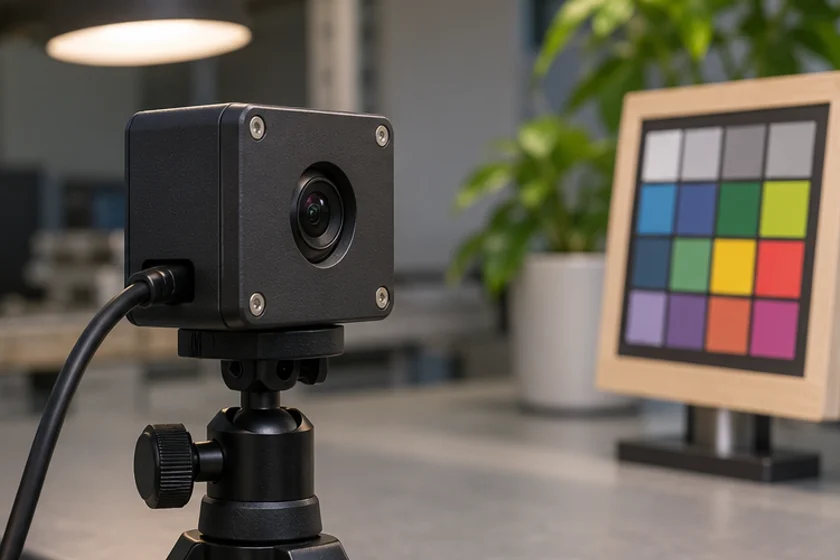
Use a table with requirement, method, pass criterion and evidence. Include capture behaviour, optics, mechanical fit, recovery and the intended environmental checks. Establish how an exception is approved and who retains the accepted sample.
Require a clear revision record when the sensor, lens, board, cable or firmware changes. A later unit should be traceable to the approved configuration. Consider the sample test checklist and production quality guide when preparing this section.
Send the brief through customization or contact. Feasibility, schedule and the offered scope should be confirmed against that brief before treating a concept as an available product.
Apply this to a camera module
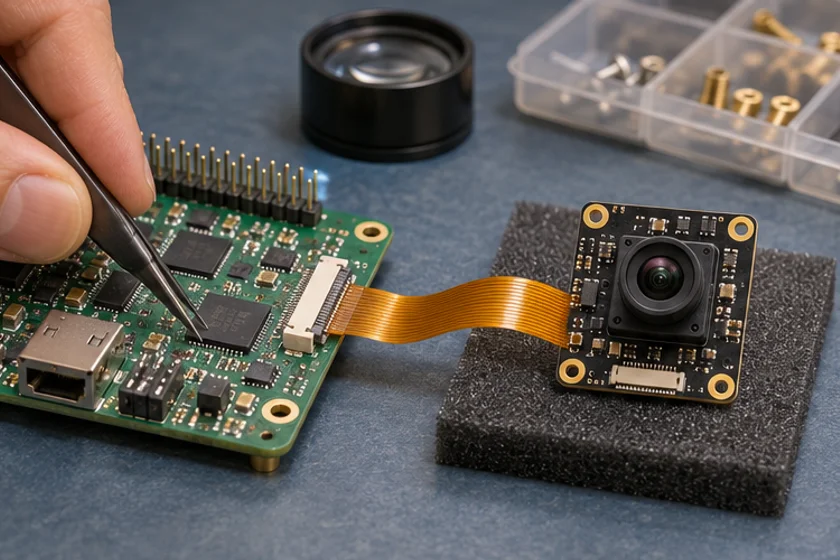
Use the DH-5835F flex assembly as a starting point when preparing a brief for a separate lens head and main board. Request an OEM quote with your proposed dimensions.
Technical references
- Define the imaging task
- Provide optics and drawings
- Describe host requirements
- Agree sample acceptance
Must every requirement be finalized before the first discussion?
No. Identify open questions explicitly and agree how feasibility or sample testing will resolve them.
What should a customization quote identify?
The proposed revision, scope, deliverables, acceptance method, quantities, ownership terms, charges and agreed schedule.