
Camera Module Types by Interface and Assembly
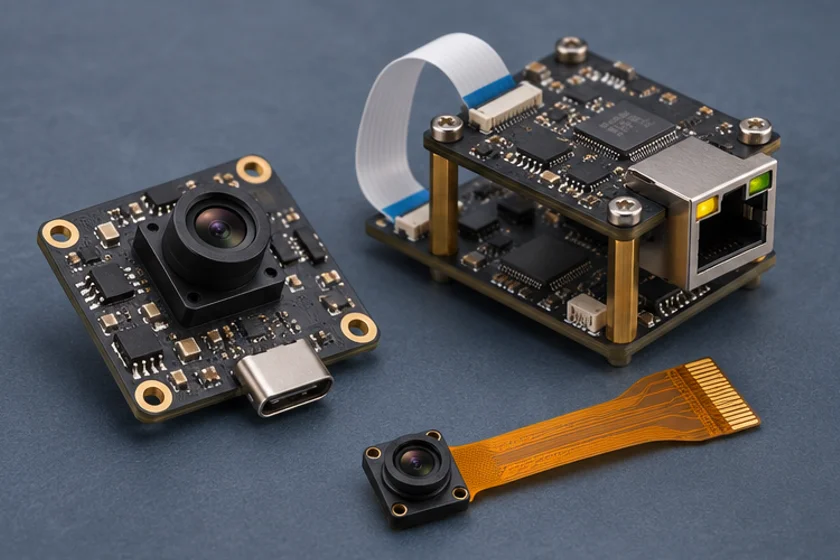
Compare USB and IP interfaces, board-level assemblies and flex-connected camera heads for equipment integration.
Prepared by Honglan Electronics
Classify a module by the decisions you need to make
Camera modules can be grouped by host interface, shutter operation, optical arrangement, focus mechanism and mechanical format. These descriptions address different properties: an FPC assembly is a physical arrangement and does not, by itself, establish its electrical interface or software compatibility.
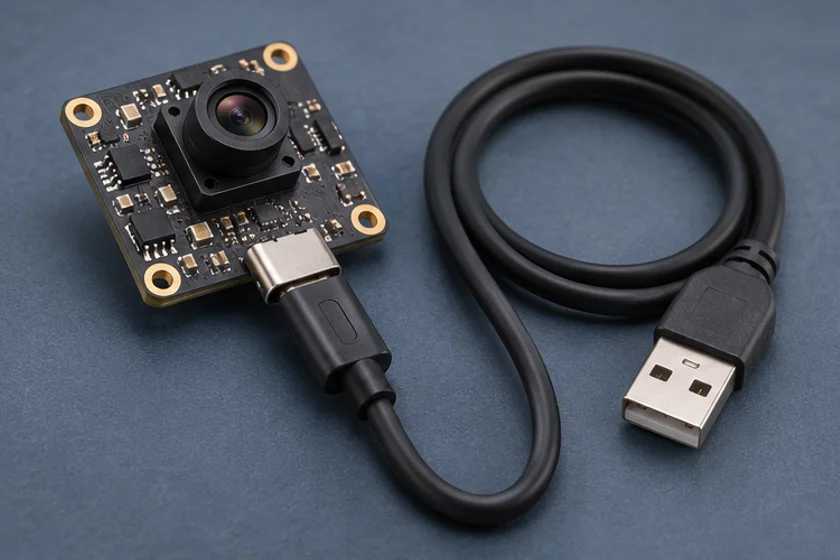
Interface and host
Determine how the camera connects, how the host receives images and which controls the application needs. USB and network connections have different integration requirements. Obtain the exact supported protocols and image modes for the selected module.
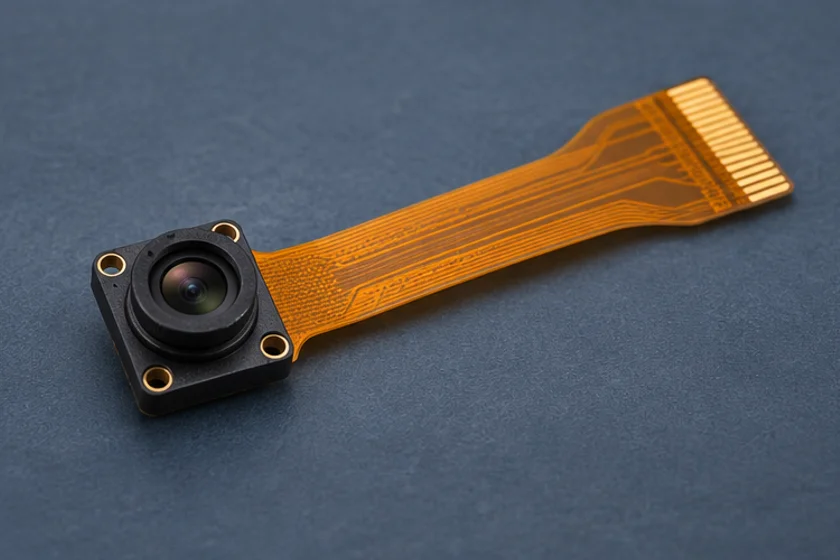
Imaging and optics
Consider scene motion when comparing shutter types. Exposure and lighting still determine motion blur. Choose field of view, working distance and usable focus range together; resolution alone cannot describe the useful detail delivered by the complete optical system.
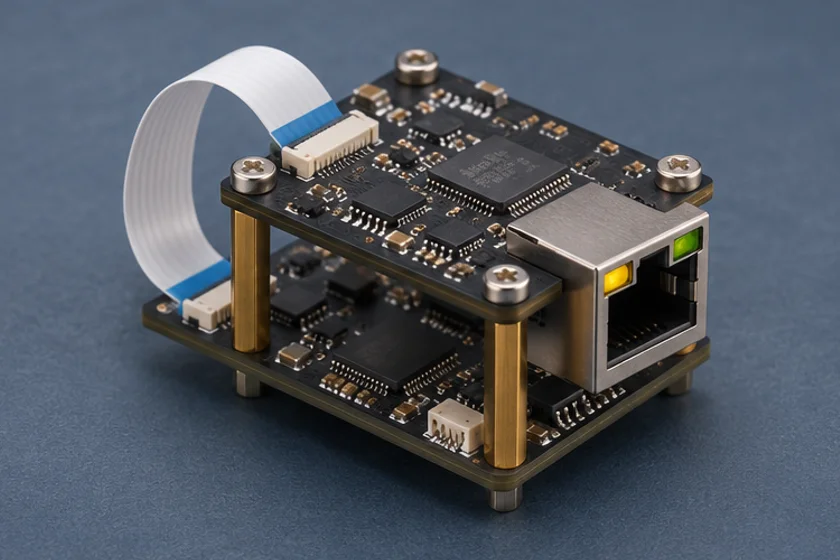
Mechanical configuration
Check board dimensions, mounting, connector orientation and cable routing. For a flex connection, confirm the connector and pinout before applying power. Modules that look similar may have different mechanical or electrical requirements.
These are general selection categories, rather than a list of capabilities guaranteed on every product. Use the actual module specification and a sample test to confirm suitability.
Browse modules, compare interfaces, and prepare a sample test.
Apply this to a camera module
Compare the USB board module, flex assembly and RJ45 network module to see how these choices affect installation.
- Choose the host interface
- Check shutter and optics
- Choose the assembly format
- Verify fit and operation